
Private lessons · Violin
Violin lessons in Miami
Four strings, a bow and no frets. Here is the instrument, and how a violinist's scales grow from one octave to three, then into double stops.
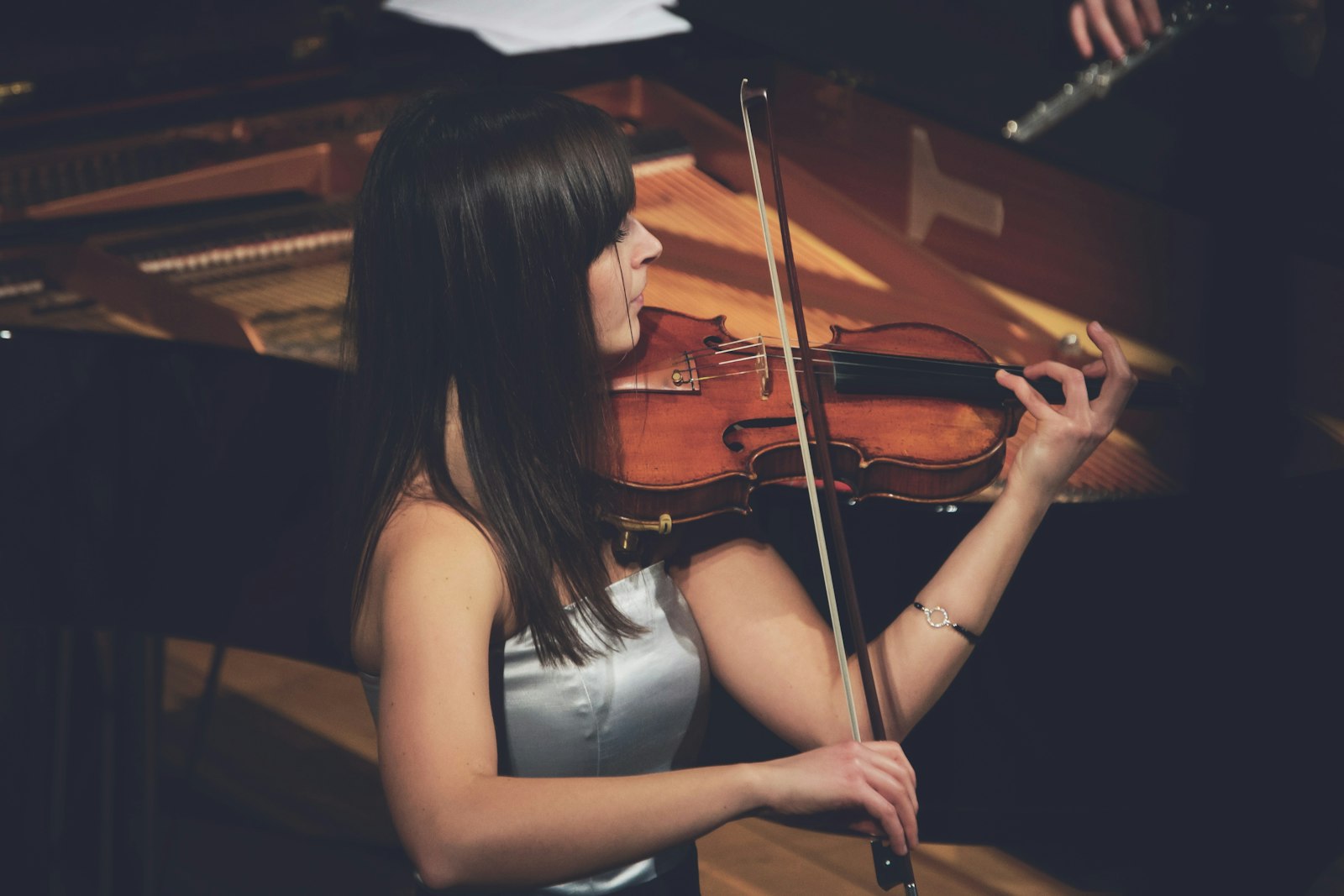
- FamilyBowed string; highest-pitched of the violin family
- TuningFour strings in fifths: G, D, A, E
- OriginNorthern Italy, early 16th century
The basics
- The violin is a bowed string instrument, the smallest and highest-pitched member of the violin family, which also includes the viola, cello and double bass.
- It usually has four strings tuned in perfect fifths: G3, D4, A4 and E5. Its lowest note is the G below middle C.
- The fingerboard has no frets, so the player finds every pitch by ear and by the placement of the left-hand fingers.
- The top is usually spruce, the back and ribs maple, and the fingerboard ebony. Bow hair is traditionally horsehair.
- Its present form emerged in early 16th-century northern Italy. In 1560 Charles IX of France ordered 24 violins from Andrea Amati; one of them is the oldest surviving violin.
- The Amati, Stradivari and Guarneri families of Cremona are the most famous makers of the 17th and 18th centuries.
- Young players use fractional sizes (3/4, 1/2, 1/4 and smaller) until their arms and fingers fit a full-size violin. In folk, country and bluegrass it is often called a fiddle.
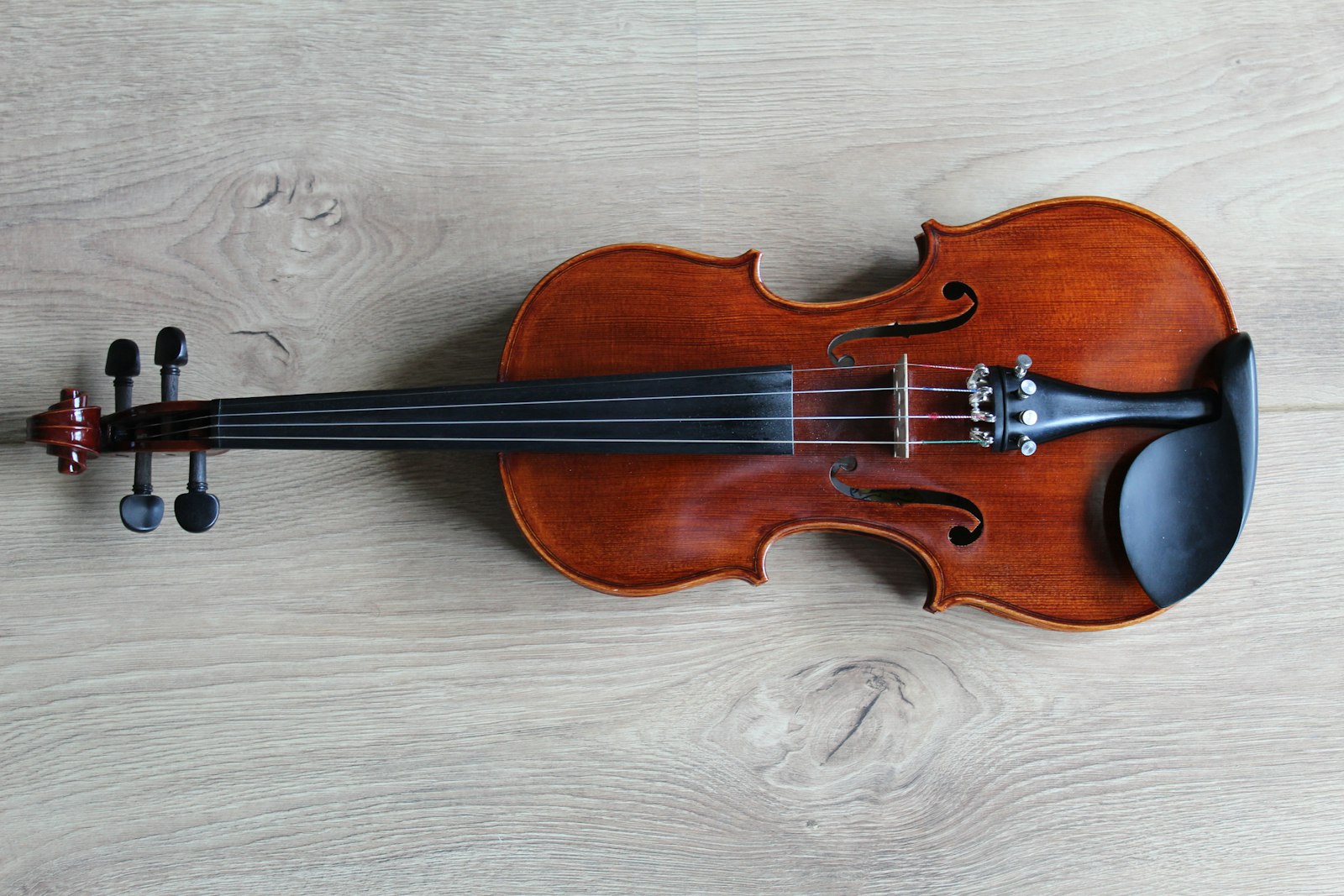
Photo: Lucia Macedo / Unsplash 
Photo: Joel Timothy / Unsplash 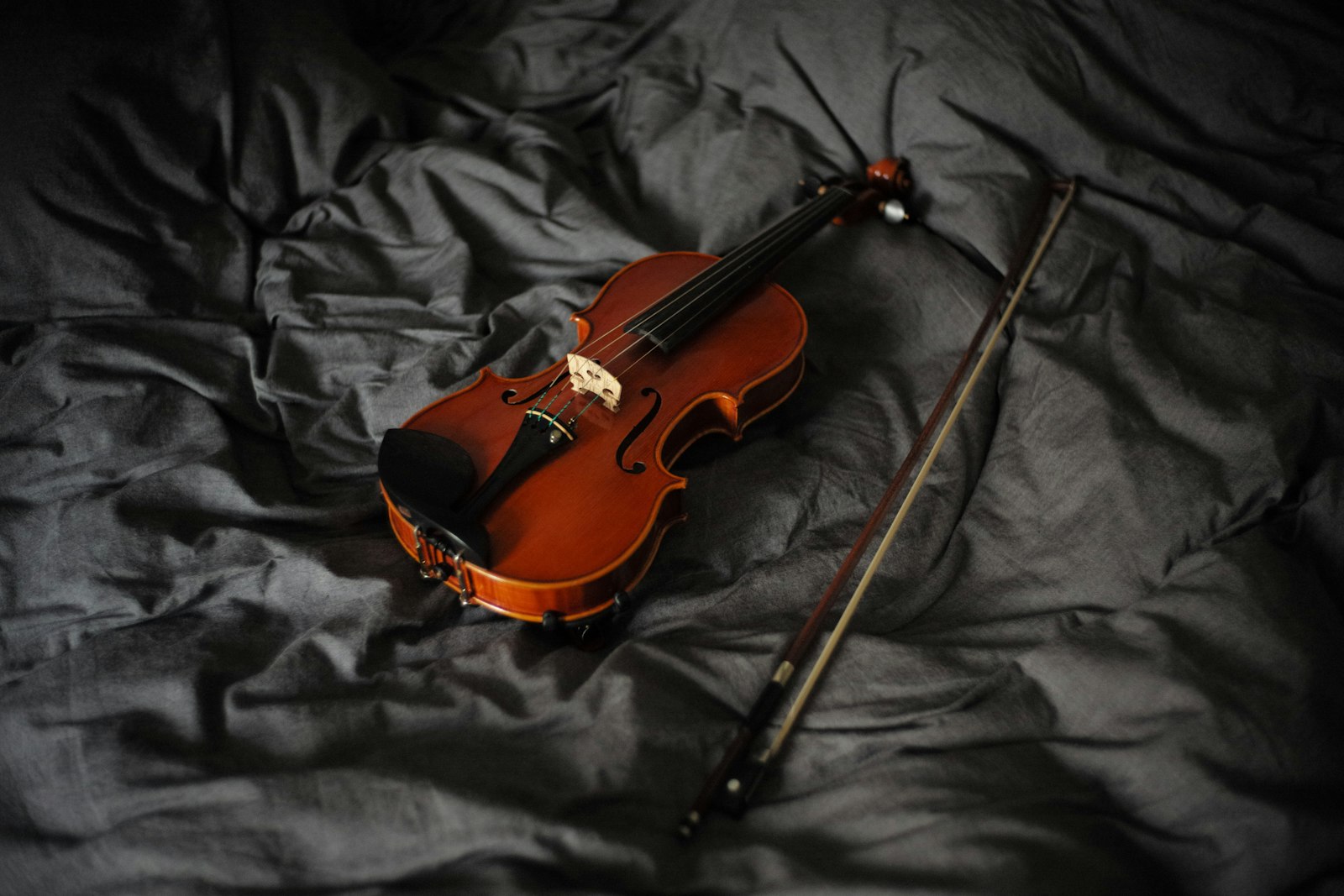
Photo: Jixiao Huang / Unsplash
How technique develops
A map of the stages, taken from published exam-board requirements (named below). It is a map of what each stage can look like, not Green Hat's own method; your teacher adapts the path to you.
Bow and open strings
Sound comes from the bow drawing across the strings. ABRSM Grade 1 already starts D and A major scales on open strings, one octave, with separate bows or two notes to a bow.
Two octaves and sevenths
By Grade 4 scales and arpeggios cover two octaves in several keys, with dominant sevenths and one-octave chromatic scales.
Three octaves
Grade 5 adds three-octave scales and arpeggios in G and A major and minor, diminished sevenths and two-octave chromatic scales.
Double stops
Grade 8 asks for three-octave scales in five keys, major and minor, plus double-stop scales: two strings at once, in octaves, sixths and broken thirds.
In these exam requirements scales and arpeggios are played from memory.
Sources
Facts come from the sources below; check them if you need exact details.